







Muscle Growth (Hypertrophy): Turn Sweat into Size and Strength
Picture your muscles like a sculptor’s clay under steady, intense hands. Muscle growth (hypertrophy) blends cellular science with deliberate effort. Because muscle fibers adapt to stress, your workouts must provoke change. As a result, consistent overloads translate into visible size and strength. Visualize fibers swelling, connective tissue strengthening, and posture improving with each set.
This guide combines research and real world practice. You will learn why rep ranges, training volume, and recovery matter. Moreover, we explain how light and heavy loads both build mass. However, mistakes in programming and recovery can cancel hard work. Fortunately, small corrections yield big returns within weeks.
Read on to fix the top five workout errors that stall gains. Each section offers science backed fixes and clear actions. By the end, you will hold a simple, repeatable plan to maximize hypertrophy. Start confident, train smart, and grow stronger every week.
How Muscle Growth (Hypertrophy) Works
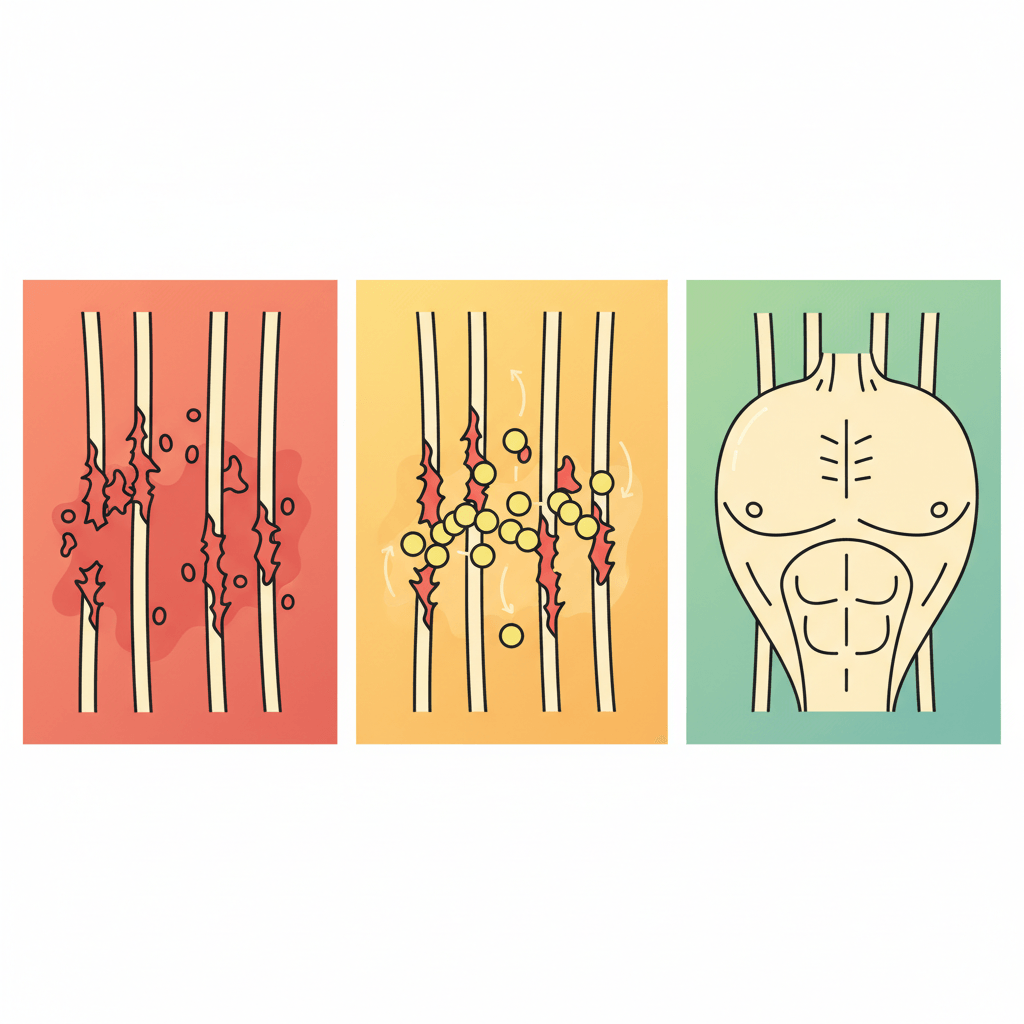
Muscle growth (hypertrophy) starts at the microscopic level. Resistance training stresses fibers and triggers repair. Because the body senses overload, it increases protein synthesis to adapt. As a result, fibers thicken and fiber number can increase slightly over time.
Muscle Growth (Hypertrophy) Triggers and Pathways
Mechanical tension drives the process. When you lift a heavy load, tension signals cells to adapt. Metabolic stress adds stimulus through fatigue and cellular swelling. Muscle damage creates a repair response that recruits satellite cells.
Research supports these mechanisms. For a full review, see Schoenfeld’s work at Schoenfeld’s work. Moreover, reviews on muscle protein synthesis after resistance training highlight how exercise and nutrition interact muscle protein synthesis review. Finally, timing and protein amount influence growth modestly timing and protein.
Key mechanisms at a glance
- Mechanical tension: force causes signaling for growth and strength
- Muscle fiber damage: microtears prompt repair and remodeling
- Metabolic stress: buildup of metabolites promotes hypertrophy
- Protein synthesis: amino acids rebuild and enlarge fibers
- Satellite cells: fuse to fibers and support growth
- Hormonal response: testosterone and growth factors assist adaptation
Practical notes
Train with progressive overload and varied rep ranges. Therefore, alternate heavy, moderate, and light days. Also, prioritize recovery because growth happens between sessions. For variable resistance, consider bands such as ElasticBands.
In the next task, request a simple diagram to visualize these cycles and signals.
Training Strategies for Muscle Growth (Hypertrophy)
Effective hypertrophy training combines smart resistance training, volume control, and progressive overload. Because muscle adapts to stress, you must plan stimulus and recovery. Therefore, structure matters more than random effort.
Principles that drive growth
- Progressive overload: increase load, reps, or sets over time to force adaptation.
- Training volume: aim for about 10 or more sets per muscle group each week.
- Intensity and rep ranges: use heavy days (3 to 5 reps), moderate days (8 to 12), and light days (15 to 20).
- Training frequency: hit each muscle at least twice weekly for best hypertrophic response.
- Time under tension: control the eccentric phase to increase mechanical stress.
Actionable workout strategies
- Follow a three day rotation: Day one heavy, day two moderate, day three light. This balances strength and metabolic stress. It also reduces injury risk.
- Use compound lifts first: squat, deadlift, bench, row. Then add isolation work for weak links.
- Track weekly sets: record per muscle group and aim to progress by one set weekly. Small increases compound into real gains.
- Go near failure on most sets. However, avoid taking every set to absolute failure to preserve recovery.
- Use tempo and pauses: slow eccentrics and short pauses raise muscle recruitment and metabolic stress.
- Employ periodization: plan 4 to 10 week blocks, then deload. This prevents overtraining.
Programming tips and recovery
- Balance volume and intensity because both drive protein synthesis. For example, increase volume when you drop intensity.
- Prioritize sleep and protein intake after sessions. Protein synthesis peaks in the 24 to 48 hours after training.
- Limit excessive steady state cardio when pursuing hypertrophy. Yet include short HIIT sessions sparingly.
Use these practical tactics consistently. As a result, you will create reliable muscle gain without burnout.
Comparing Muscle Growth (Hypertrophy) Training Methods
Below is a quick table comparing common hypertrophy training methods. Therefore use it to pick the right approach for your goals.
| Method | Description | Benefits | Ideal Use Cases |
|---|---|---|---|
| High Volume | Higher weekly sets per muscle group with moderate intensity. | Boosts time under tension and total workload, therefore it grows size. | Best for hypertrophy phases and trainees who recover well. |
| High Intensity | Low reps with heavy loads to maximize mechanical tension. | Builds strength, recruits fast fibers, and also improves neural drive. | Use in strength blocks or when increasing load is the goal. |
| Drop Sets | Perform a set to near failure then reduce weight and continue. | Raises metabolic stress and muscle pump, additionally creating extra stimulus. | Use as a finisher or when time is limited. |
| Supersets | Do two exercises back-to-back with minimal rest. | Increases workout density and metabolic stress, also saving time. | Good for conditioning and short sessions, or pairing opposing muscles. |
| Free Weights | Barbells and dumbbells demand balance and full-body recruitment. | Offer heavy loading and carryover to real lifts; as a result they build practical strength. | Use for primary compound moves and heavy progressive overload. |
| Machines | Guided paths that isolate muscles and limit stabilizer demand. | Enable precise targeting and safer high-volume work, therefore reduce injury risk during high sets. | Best for isolation, rehabilitation, beginners, and high-set phases. |
Conclusion
Muscle growth (hypertrophy) fuels strength and everyday performance. Because muscles adapt to stress, well planned training leads to visible change. As a result, small program fixes produce big returns over time.
JackedApe builds gear for athletes who train with intent. Their tactical design and athlete testing improves durability and comfort. They collaborate with fighters and athletes to refine function and fit. Moreover, their products support high intensity sessions and recovery. Explore their gear at JackedApe and shop at JackedApe Shop.
Across gyms and rings, JackedApe tests gear with fighters and athletes. Therefore their pieces focus on mobility, durability, and tactical pockets. Because athletes demand function, the brand refines fit through athlete feedback. That collaboration makes clothing that lasts under heavy use. Start strong and stay relentless.
Train smart, be consistent, and trust the process. Visit the blog for routines and tips at JackedApe Blog. Suit up, push harder, and watch your muscle growth (hypertrophy) follow.
Frequently Asked Questions (FAQs)
How often should I train a muscle for optimal hypertrophy?
Train each muscle at least twice per week. Aim for about 10 sets per muscle group weekly. Therefore spread those sets across two or three sessions. This increases training volume and recovery balance.
How much protein and when should I eat it?
Consume roughly 1.6 to 2.2 grams per kilogram of body weight daily. For many, that equals about 0.7 to 1.0 grams per pound. Also spread protein over 3 to 5 meals. As a result, you support steady protein synthesis.
Should I train to failure?
Go near failure on most sets to drive adaptation. However avoid pushing every set to absolute failure. That preserves recovery and reduces injury risk. Use true failure sparingly as a tool.
How much rest do I need between sessions?
Schedule at least two to three full rest days weekly. Also plan de load blocks every four to ten weeks. Prioritize sleep and nutrition because growth happens between workouts.
Can I do cardio while chasing hypertrophy?
Yes, but limit steady state cardio to three or four weekly sessions. If you do HIIT, keep it to two or three 20 minute sessions. Therefore preserve energy for strength training and recovery.


Can Maingaining and calisthenics for beginners build lean mass?
Maingaining and calisthenics for beginners unlock efficient, lean muscle gains with minimal fluff. This approach...
How do thoracic spine stretches relieve desk pain?
Thoracic Spine Stretches Guide Thoracic spine stretches are essential for anyone who sits all day....
How does maingaining build lean muscle without bulk?
maingaining: build lean muscle without excessive bulk Maingaining puts muscle gain first while limiting excess...
Milano Cortina 2026 Winter Olympics: new sports spotlight?
New sports at the Milano Cortina 2026 Winter Olympics Anticipation is building across the fanbase...
How does Omorpho G-Vest Icon boost conditioning?
Omorpho G-Vest Icon The Omorpho G-Vest Icon is a layerable weighted vest for real training....
Why thoracic spine stretches boost breathing and mobility?
thoracic spine stretches Thoracic spine stretches unlock a freer mid-back and better posture. Sit for...
What is maingaining in a 4-week plan?
maingaining: Build Lean Muscle While Staying Agile Maingaining marries steady muscle growth with athletic fitness,...
What are the true benefits of weight loss transformation?
A weight loss transformation can rewrite how you live and feel. It changes more than...