




Pullups: Mastering the King of Upper Body Moves
Pullups transform your upper body and build real relative strength. Because they force you to lift your own bodyweight, they test functional power and coordination. As a result, each rep challenges the lats, biceps, forearms, and core.
- Build relative strength while improving posture and grip
- Also boost arm size and V shape appeal
- Furthermore, they translate to better performance in other lifts
- They work whether you train at home or in the gym
Whether you are a beginner or an athlete, pullups scale with smart programming. However, progress requires patience and steady practice. Therefore this article lays out simple progressions and practical sets and reps to get you stronger fast.
Along the way you will learn progressions from assisted reps to unassisted sets. For beginners, resistance bands and negatives speed adaptation and build confidence. Also, simple techniques will sharpen your grip and core stability.
Pullups: Muscles Worked and Why They Matter
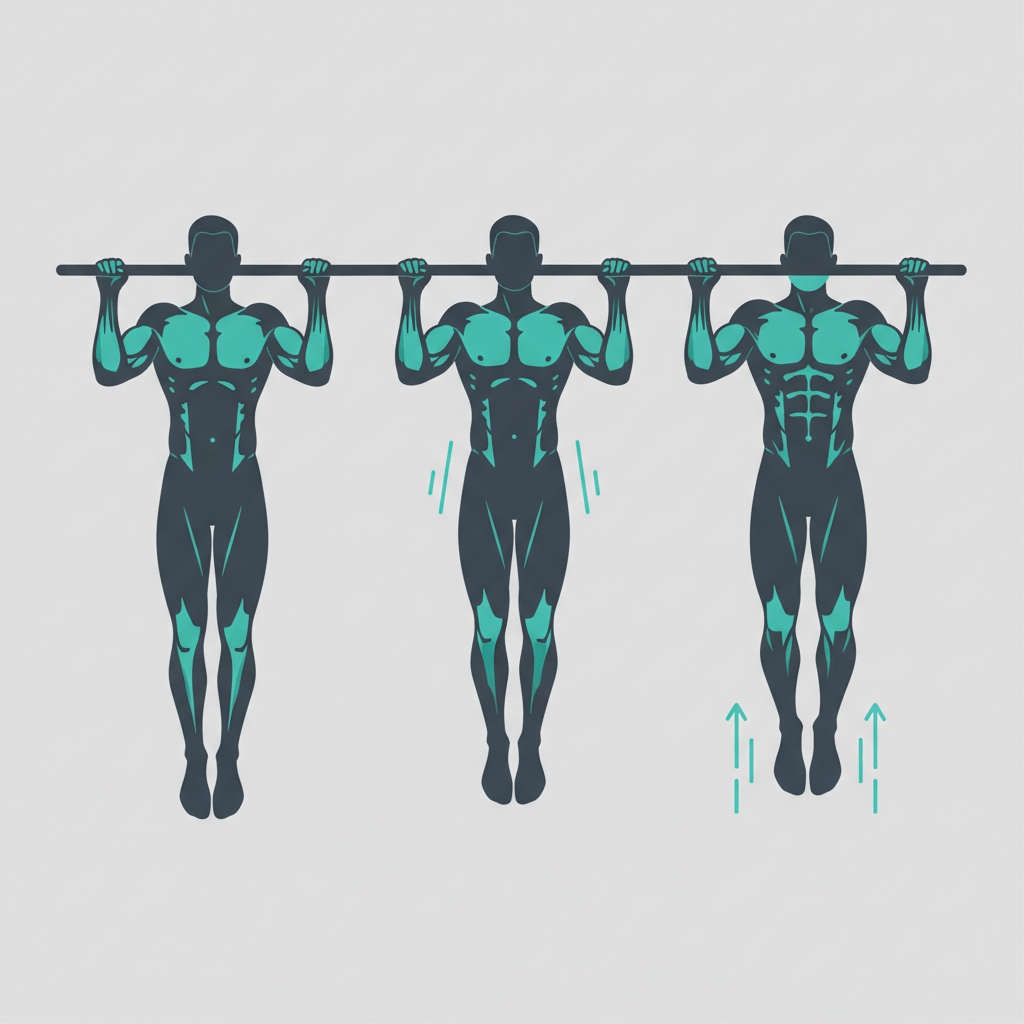
Pullups recruit large back muscles and build real upper body strength. Because they use your full bodyweight, they force the lats to work hard. As a result, your biceps and forearms also get heavy stimulation.
Pullups improve posture and grip, and they also boost core stability. Therefore they carry over to other lifts and sports. Moreover, they create that sought after V shape.
Key muscle groups targeted by pullups
- Latissimus dorsi (lats): The primary mover for pulling your torso up. Also they help create a wide back and V taper.
- Biceps brachii and brachialis: They assist elbow flexion, so pullups also build arm size.
- Rhomboids and middle traps: These back muscles retract the shoulder blades during the pull.
- Lower and upper traps: They stabilize the shoulder girdle, especially at the top of the movement.
- Rotator cuff muscles: They keep the shoulder joint safe and controlled through the range.
- Forearms and grip: Because you lift your body, your grip strength improves fast.
- Core and obliques: They stabilize the body and prevent swinging during the pull.
For beginners, use simple aids to train the right muscles. For example, try a resistance band like ElasticBands – Silicone Elastic Resistance Band to assist reps. Also consider wrist and forearm tools such as PowerWrist when grip limits progress. Finally, pick training gear you love, for instance the Tactical unisex sleeveless jersey, because confidence helps consistency.
| Variation | Difficulty | Primary muscles worked | Benefits |
|---|---|---|---|
| Wide grip pullup | Hard | Lats, traps, rhomboids | Emphasizes lat width and V shape. Improves scapular control. |
| Classic overhand pullup | Moderate to hard | Lats, biceps, brachialis | Balanced back and arm strength. Great all-rounder. |
| Chin-up (underhand grip) | Moderate | Biceps, lats, brachialis | Boosts biceps growth. Easier for many beginners. |
| Neutral grip pullup | Moderate | Lats, biceps, forearms | Shoulder friendly. Also easier on wrists and cuffs. |
| Commando pullup | Hard | Lats, obliques, biceps | Trains unilateral strength and core stability. |
| Archer pullup | Very hard | Lats, biceps, forearms | Builds single-arm strength and control. Excellent progression. |
| Assisted pullup (band or negative) | Easy to moderate | Same as chosen variation | Scales for beginners. Helps build unassisted reps and form. |
Tip: choose the variation that matches your goal. If you want width, favor wide grip. If you want arms, pick chin-ups. If you have shoulder pain, try neutral grip. Therefore rotate variations to avoid plateaus.
Pullups: Training Tips and Common Mistakes
Pullups improve upper body strength and overall athleticism. However, progress stalls when common errors persist. Therefore adopt focused habits and simple corrections to climb faster.
Training tips
- Warm up the shoulders and scapula before heavy work. This reduces injury risk and primes the lats.
- Use progressive overload by increasing reps, sets, or difficulty over weeks. Also add weighted pullups once you hit a six rep threshold.
- Pair assisted sets with unassisted attempts. For example, do one or two assisted reps between sets of rows. As a result, you build both strength and confidence.
- Focus on full range of motion. Begin from a dead hang and pull until your chin clears the bar. Moreover pause briefly at the top to enhance control.
- Train grip directly. For instance, incorporate farmer carries and wrist work to fix grip bottlenecks.
Common mistakes and quick fixes
- Kipping or excessive swing. Reduce momentum and tighten the core instead. Controlled reps build real strength.
- Half reps and poor range. Stop short of the top and you stall gains. Instead strive for complete reps every set.
- Overtraining without rest. Muscles need recovery to grow and adapt. Therefore plan two to three focused pullup sessions weekly.
- Ignoring scapular control. Practice active hangs and scapular pulls to correct this issue.
Finally, track small wins and stay consistent. Small progress compounds into big pullup gains.
CONCLUSION
Pullups reward consistent technique and steady progression. Therefore mastering form protects your shoulders and forces the right muscles to work. As a result, you build relative strength and practical power. Small, regular gains compound into major performance improvements.
Train with targeted progressions, not reckless volume, and respect recovery. For example, use assisted reps, negatives, and controlled tempo. Also strengthen grip and scapular control to remove bottlenecks. Finally, track reps, rest, sleep, and recovery for steady overload.
JackedApe is built for athletes who train with intensity. Their gear supports serious performance and daily training consistency. Explore gear and training tools at JackedApe. Shop training essentials at JackedApe Shop. Read training tips and guides at JackedApe Blog.
Frequently Asked Questions (FAQs)
How do I start if I cannot do a single pullup?
Start with assisted progressions and focused skill work. Use resistance bands or an assisted machine to reduce load. Also practice negative reps by jumping to the top and lowering slowly. Do scapular pulls and rows to strengthen the back and scapular control. Train grip and core separately. Consistency matters, so add short practice sessions two to three times weekly.
How often should I train pullups to see progress?
Train pullups two to three times per week for steady gains. Also include accessory work like rows and farmer carries. Alternate heavy, moderate, and technique days. Therefore you avoid overtraining and build strength faster. Rest and sleep matter, so recover fully between sessions.
What common form mistakes should I avoid?
Avoid kipping and excessive swing because they reduce strength gains. Also stop doing half reps; use full range of motion instead. Many lifters neglect scapular control. Fix this by practicing active hangs and scapular pulls. Finally, brace the core to prevent hip kick and cheating.
How long until I can do six unassisted pullups?
It depends on your starting point, age, and training history. However, a realistic window is six to twelve weeks for many beginners. Use progressive overload, band assistance, and negatives. Track reps and increase workload slowly. Also improve grip, rows, and core strength to speed progress.
Should I add weight once I can do six pullups?
Yes, add weight if you want strength or hypertrophy. Start with small increments and aim for three to five sets. For strength, target three to six reps. For size, use eight to twelve reps. Also cycle volume and intensity to avoid plateaus and injury.


Can Maingaining and calisthenics for beginners build lean mass?
Maingaining and calisthenics for beginners unlock efficient, lean muscle gains with minimal fluff. This approach...
How do thoracic spine stretches relieve desk pain?
Thoracic Spine Stretches Guide Thoracic spine stretches are essential for anyone who sits all day....
How does maingaining build lean muscle without bulk?
maingaining: build lean muscle without excessive bulk Maingaining puts muscle gain first while limiting excess...
Milano Cortina 2026 Winter Olympics: new sports spotlight?
New sports at the Milano Cortina 2026 Winter Olympics Anticipation is building across the fanbase...
How does Omorpho G-Vest Icon boost conditioning?
Omorpho G-Vest Icon The Omorpho G-Vest Icon is a layerable weighted vest for real training....
Why thoracic spine stretches boost breathing and mobility?
thoracic spine stretches Thoracic spine stretches unlock a freer mid-back and better posture. Sit for...
What is maingaining in a 4-week plan?
maingaining: Build Lean Muscle While Staying Agile Maingaining marries steady muscle growth with athletic fitness,...
What are the true benefits of weight loss transformation?
A weight loss transformation can rewrite how you live and feel. It changes more than...