





Understanding Muscle Soreness
Every lifter knows the ache that follows a hard session. Whether it is a dull throb or sharp tightness, muscle soreness after workout tells a story about strain, repair, and growth. For many, that sensation feels like proof of effort. Yet, understanding what that feeling means matters for progress and safety.
When interpreted correctly, soreness guides recovery and helps tune training. However, when misread, it can push you toward overtraining and injury. This guide will help you tell the difference between useful soreness and warning pain. You will learn simple signs to watch for and actions to take.
Because small micro tears are normal, you should not panic at every ache. As a result, you can train smarter and recover faster. Also, you will discover how recovery tools fit into a plan. Meanwhile, you’ll gain confidence in your workouts and in your long term gains.
Ultimately, soreness should inform your choices, not scare you away. So keep lifting with purpose and respect your body.
Causes and symptoms of muscle soreness after workout
What causes muscle soreness after workout and delayed onset muscle soreness (DOMS)
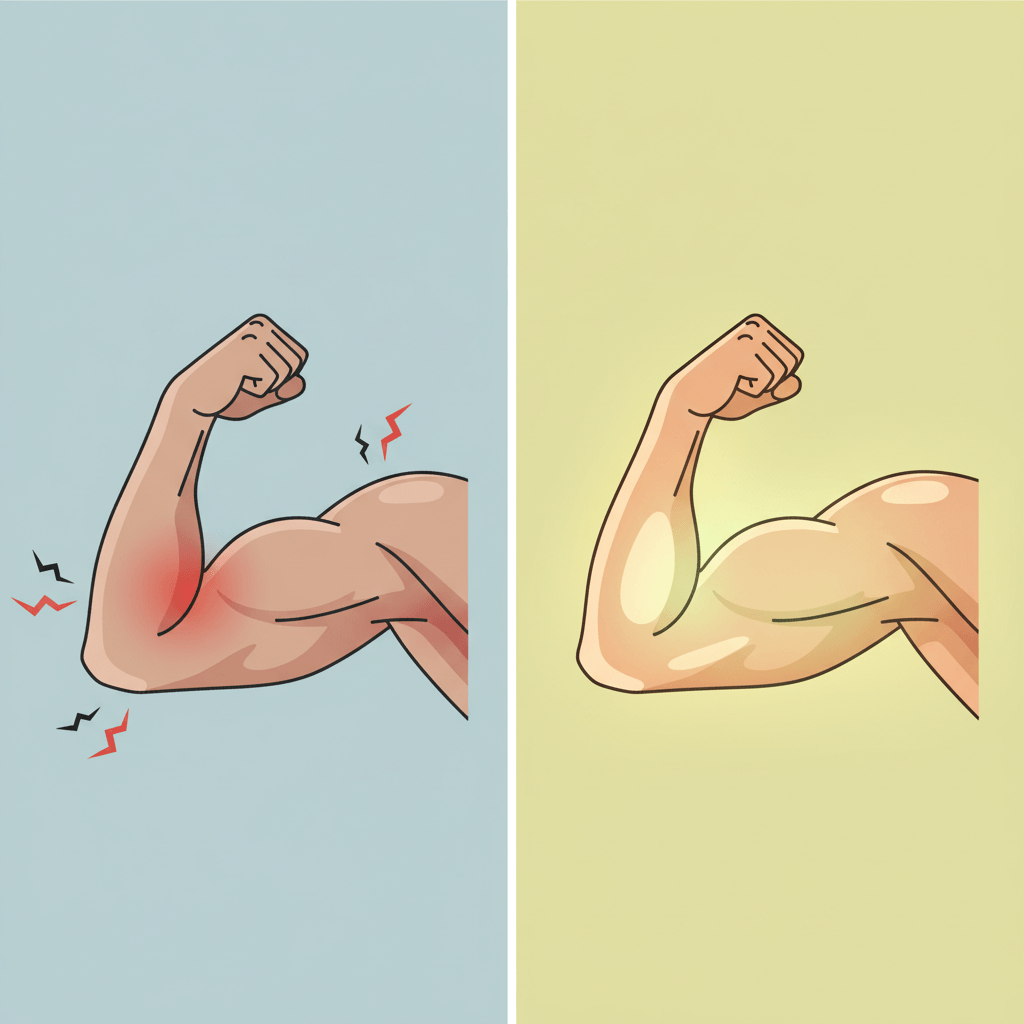
Muscle soreness after workout often begins with microscopic damage to muscle fibers. Because muscles experience eccentric loading, tiny tears form. As a result, the body mounts an inflammatory response. That inflammation produces pain and stiffness over days. Research also points to connective tissue and neural factors as contributors. For a clear overview of DOMS, see Healthline. A deeper review appears at PubMed.
Common causes
- Micro-tears in muscle fibers from eccentric exercise and overload
- Local inflammation and immune cell activity
- Damage or strain to deep fascia and connective tissue
- Neural sensitization of pain receptors in muscle spindles
- Sudden increases in volume, intensity, or new exercises
- Poor exercise form or muscle imbalances
- Inadequate recovery, sleep, or protein intake
Symptoms and recovery cues: delayed onset muscle soreness and when it matters
Soreness usually peaks 24 to 72 hours after exercise. Common symptoms include
- Muscle tenderness and localized pain
- Stiffness and reduced range of motion
- Temporary drop in strength and power
- Mild swelling or tightness in the worked muscles
- Pain worse with movement but easing at rest
However, joint pain or sharp, persistent pain is a red flag. Therefore seek medical advice if pain limits function. Meanwhile, use active recovery and targeted tools to aid healing. Try foam rolling tips at Jackedape. Also prioritize protein rich meals like these recipes Jackedape to support repair.
Effective treatments for muscle soreness after workout
Natural remedies and active recovery for delayed onset muscle soreness
Active recovery helps blood flow and nutrient delivery. Therefore light cycling, walking, or mobility drills can reduce stiffness. Also try gentle dynamic stretching to restore range of motion. Because circulation aids healing, aim for 10 to 20 minutes of low intensity movement the day after hard training.
Common natural methods
- Active recovery such as walking or easy cycling
- Gentle dynamic stretching for mobility and pain reduction
- Contrast water therapy or cold baths for short term relief
- Compression garments to limit swelling and speed perceived recovery
Evidence supports several of these approaches. For example, a systematic review found that active recovery, massage, compression, and immersion reduce soreness compared with no treatment here.
Physical therapies and recovery tools
Massage and soft tissue work lower pain and improve function. As a result, athletes often use foam rolling, percussion devices, or manual massage. Foam rolling shows measurable benefits for soreness and performance recovery in trials here. Meanwhile, cold and heat modalities can help depending on timing. A network meta analysis compared heat, cold, and contrast therapies and offers guidance for timing and effect sizes here.
Practical tool tips
- Use foam rolling for 5 to 10 minutes on sore areas
- Use a percussion device briefly to improve circulation and ease tightness
- Alternate cold and heat based on symptom timing and comfort
Nutrition, sleep, and rest strategies for recovery
Nutrition and sleep fuel repair. Therefore prioritize protein and total calories after tough sessions. Aim for 20 to 40 grams of protein within two hours post workout. Also hydrate to support metabolic waste removal. Meanwhile, prioritize sleep since most muscle repair happens overnight. Finally, avoid chasing soreness. Instead follow progressive overload and plan recovery days to protect long term gains. For broader physical therapy options and evidence, see this review here.
| Method | Description | Benefits | Ideal Use Case |
|---|---|---|---|
| Stretching | Gentle static and dynamic stretches for tight muscles. | Improves flexibility and range of motion. Also reduces stiffness. | After warmup or during active recovery days. |
| Hydration | Restores fluids and supports metabolic waste removal because muscles need fluids to recover. | Reduces cramping and speeds recovery when paired with nutrition. | Continuous throughout the day, especially post workout. |
| Ice baths | Cold water immersion to blunt inflammation and pain. Effective short term. | Lowers soreness perception immediately. However effects on long term adaptation vary. | Use after very intense sessions when recovery is urgent. |
| Foam rolling | Self myofascial release to ease tight spots and improve mobility. | Can reduce soreness and restore movement. Also complements massage. | 5 to 10 minutes on sore areas, post session or next day. |
| Nutrition | Protein and calories to support repair and growth. | Speeds muscle repair. Therefore helps longer term adaptation. | Within two hours post workout and across the day. |
Conclusion
Muscle soreness after workout can mean progress or a warning. When soreness follows normal micro-tears and peaks after 24 to 72 hours, it often signals adaptation and growth. However, excessive soreness, joint pain, or full-body fatigue may indicate overtraining or injury. Therefore use evidence based recovery tools such as active recovery, foam rolling, proper nutrition, sleep, and targeted physical therapies. These strategies reduce downtime and help you hit your next session at full strength.
JackedApe supports athletes who train hard and recover smarter. As a high performance fitness and combat apparel brand, JackedApe builds gear for fighters and lifters. Their range includes recovery tools and performance apparel designed for durability and function. Visit JackedApe to explore their shop at JackedApe Shop and learn more about the brand at JackedApe. Follow their blog for tips and product guides at JackedApe Blog.
Train with intent, respect your recovery, and let soreness inform—not control—your progress. Keep pushing forward with smart strategies and the right gear.
Frequently Asked Questions (FAQs)
What causes muscle soreness after workout?
Muscle soreness after workout usually comes from microscopic tears in muscle fibers. Because of eccentric loading and new exercises, the body triggers inflammation. This process causes delayed onset muscle soreness. Also, poor form and sudden volume jumps increase risk.
How long will delayed onset muscle soreness last?
Soreness often peaks between 24 and 72 hours. Then it fades over several days. However, severe or worsening pain needs medical attention.
Do I need soreness to make gains?
No. Soreness does not equal an effective workout. You can progress with progressive overload and smart training. Therefore chase strength, not soreness.
What are the fastest ways to recover from muscle soreness?
Use active recovery like walking or light cycling. Also use foam rolling and targeted massage. Prioritize sleep, protein, and hydration because repair depends on them. Finally, use cold or contrast therapy for short term relief.
When should I see a doctor for post workout pain?
See a doctor for severe sharp pain or joint pain. Also seek help when pain limits daily function. Meanwhile, persistent swelling or numbness deserves evaluation.


Can Maingaining and calisthenics for beginners build lean mass?
Maingaining and calisthenics for beginners unlock efficient, lean muscle gains with minimal fluff. This approach...
How do thoracic spine stretches relieve desk pain?
Thoracic Spine Stretches Guide Thoracic spine stretches are essential for anyone who sits all day....
How does maingaining build lean muscle without bulk?
maingaining: build lean muscle without excessive bulk Maingaining puts muscle gain first while limiting excess...
Milano Cortina 2026 Winter Olympics: new sports spotlight?
New sports at the Milano Cortina 2026 Winter Olympics Anticipation is building across the fanbase...
How does Omorpho G-Vest Icon boost conditioning?
Omorpho G-Vest Icon The Omorpho G-Vest Icon is a layerable weighted vest for real training....
Why thoracic spine stretches boost breathing and mobility?
thoracic spine stretches Thoracic spine stretches unlock a freer mid-back and better posture. Sit for...
What is maingaining in a 4-week plan?
maingaining: Build Lean Muscle While Staying Agile Maingaining marries steady muscle growth with athletic fitness,...
What are the true benefits of weight loss transformation?
A weight loss transformation can rewrite how you live and feel. It changes more than...