






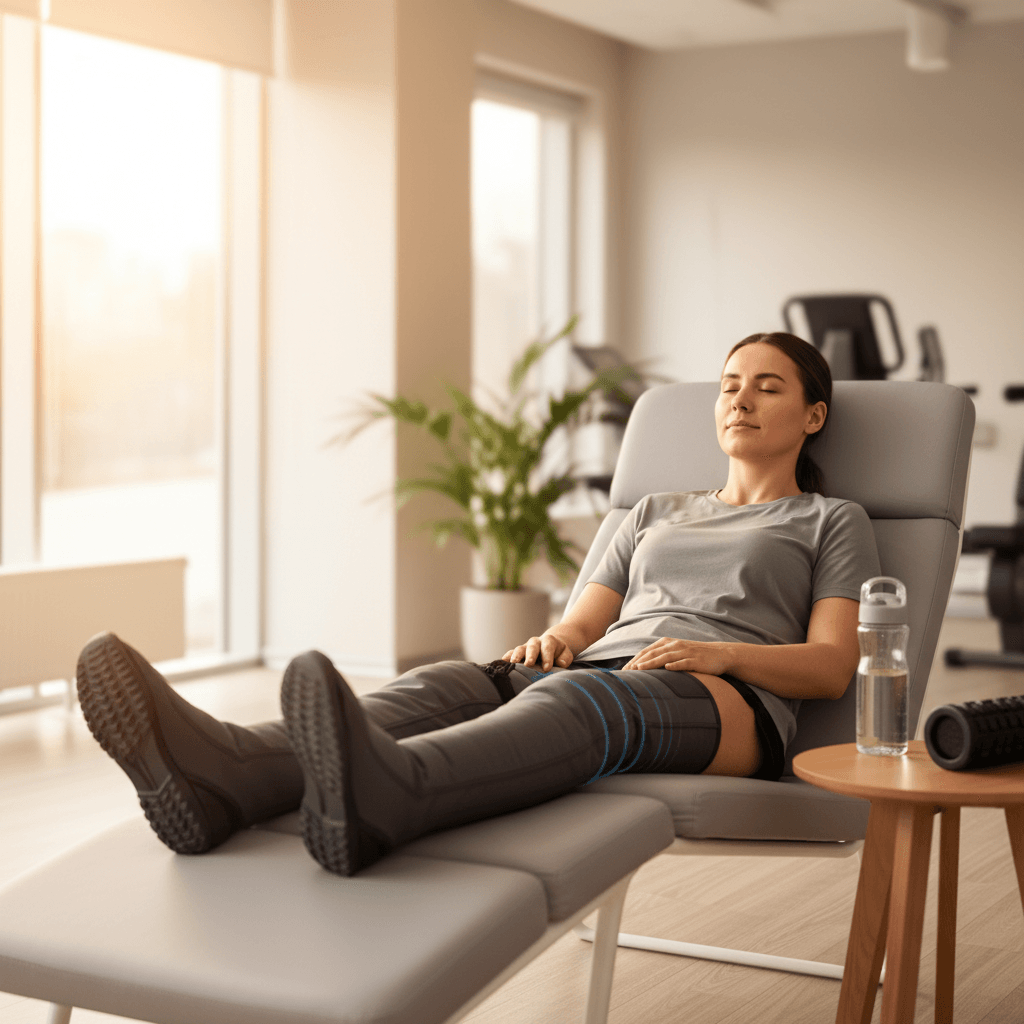
Compression Boots: The Recovery Tool Changing How Athletes Regenerate
Compression boots are wearable devices that squeeze your legs with air. They use pneumatic compression and mimic manual massage. Because they improve blood flow and reduce swelling, athletes and trainers use them in post workout recovery and compression therapy routines.
However, they do more than feel good. Many people now add compression boots to post workout recovery routines for faster relief. Therapists pair compression devices with heat, vibration, and red light for added benefits. As a result, users often report less soreness and quicker return to training.
This article will explain how compression boots work and when to use them. We will cover settings like mmHg, battery life, and portability. Then we will compare popular recovery boots and offer practical tips for daily use. By the end, you will know whether this therapy fits your routine.
Expect clear, practical advice that blends science with user experience. However, note that long term research shows mixed results. Still, short term relief and nervous system down regulation are common benefits. Our tone stays measured, uplifting, and consumer focused.
In this guide you will find
- How compression therapy can speed short term recovery
- Key features to look for like mmHg ranges and battery life
- Simple protocols for pre and post workout use
Benefits of Compression Boots: Why Athletes Add Them to Recovery Routines
Compression boots serve as powerful recovery tools for athletes and fitness lovers. They use sequential pneumatic pressure to boost blood flow. As a result, tissues clear metabolic waste faster. Because of this mechanism, many users notice quicker muscle regeneration and less post workout ache.
Key benefits
- Improved blood circulation — Compression chambers squeeze and release your legs. This rhythmic action moves blood toward the heart. Therefore, fresh oxygen and nutrients reach tired muscles faster.
- Reduced muscle soreness — Many athletes report lower delayed onset muscle soreness. For example, brief sessions after hard training calm inflammation and ease stiffness.
- Faster recovery time — By clearing waste products like lactate, boots speed functional recovery. As a result, athletes return to training sooner.
- Enhanced athletic performance — When recovery improves, performance follows. Consistent use can help preserve strength and power between sessions.
Combine with other recovery tools for better results. Try a targeted massage with the Ape Gun after a boot session. Also consider rolling with the FlexRoll to loosen tight areas.
Research on compression garments shows benefits for soreness and muscle function. See one systematic review here. However, note that evidence for long term regeneration is mixed. Still, the short term benefits make compression boots a practical tool for many athletes.
| Model | Approx price (USD) | Technology and key features | Durability and build | Typical user rating |
|---|---|---|---|---|
| Normatec Elites | About 1000 to 1300 | Sequential pneumatic compression. Normatec 3.0 control unit. Dual attachments supported. Travel bag included. | Built for heavy use. High quality materials. Long lifespan with proper care. | 4.4 of 5 |
| Therabody JetBoots Prime | About 400 to 800 | 20 to 100 mmHg range. Four pressure levels: 25 50 75 100 mmHg. Lightweight and portable. | Durable modern shell. Good battery life when charged. Reliable daily use. | 4.2 of 5 |
| Hyperboots (Nike x Hyperice) | About 900 to 1400 | High max pressure up to 210 mmHg. Multiple heat settings up to 125 F. Sport focused tech. | Rugged athletic design. Built to withstand frequent sessions. Solid warranty support. | 4.1 of 5 |
| Therabody PRO Plus | About 900 to 1400 | Integrates vibration and red light therapy. Multiple preset programs. Isolation and interval modes. | Premium materials and finish. Designed for pro level use. Very resilient. | 4.3 of 5 |
How to use this table
First consider your budget and portability needs. Also weigh technology differences like mmHg range and added therapies. Because durability affects long term value, prioritize build quality for daily use. Finally choose the boot that best matches your recovery goals and training load.
How Compression Boots Work: The Science Behind Intermittent Pneumatic Compression
Intermittent pneumatic compression drives the magic behind compression boots. The boots inflate and deflate in chambers. Each chamber tightens, then releases, in a wave. Because this sequence mimics hands-on massage, the device moves fluid and blood upward. As a result, pooled fluid clears faster and circulation improves.
Intermittent pneumatic compression explained
The control unit pushes air into segmented chambers. Each segment compresses a small area of the leg. Therefore, pressure moves from foot to thigh in a programmed rhythm. Devices vary in maximum pressure and timing, so check mmHg specs. For reference, common clinical levels start around 20 mmHg.
How blood flow and fluid dynamics change
Sequential compression compresses veins and lymphatic vessels. This action reduces venous stasis and moves metabolic byproducts away. Consequently, fresh arterial blood reaches muscles sooner. Faster blood flow delivers oxygen and nutrients that support repair and performance.
Effects on muscle healing and inflammation
Compression limits local swelling and reduces temporary inflammation. However, timing matters. For best results, wait a few hours after intense training before compressing heavily. Still, short sessions immediately before exercise can warm tissues and prime muscles. Clinical studies show mixed long term effects, but several report short term relief and reduced soreness. See one review for more details here.
Practical takeaways
Use moderate pressure and timed programs for most sessions. Also pair boots with active recovery tools like foam rolling. Finally, listen to your body and adjust pressure accordingly. With consistent, measured use, compression boots can become a practical part of your recovery routine.
Conclusion: Compression Boots, Recovery, and the JackedApe Edge
Compression boots have earned a place in modern recovery routines. They deliver rhythmic pneumatic pressure that improves blood flow and eases muscle soreness. As a result, many athletes find faster short term recovery and less downtime between sessions. However, long term evidence remains mixed, so treat boots as one tool among many.
JackedApe supports athletes who train with intensity and live with purpose. The brand focuses on high performance fitness and combat apparel built for durability and movement. Also JackedApe offers recovery tools and gear designed to match the effort you put into training. Because quality equipment matters, their products aim to help you stay consistent and perform at your best.
If you want more from JackedApe visit their home page JackedApe Home Page. See their shop for recovery and training gear JackedApe Shop. Read expert articles on the blog JackedApe Blog. Follow updates and community news on X JackedApe X.
Use compression boots thoughtfully. Pair them with active recovery practices. Then you will build resilience and enjoy more productive training days.
Frequently Asked Questions
What do compression boots do?
Compression boots use intermittent pneumatic compression to squeeze the legs in a rhythmic wave. This boosts venous return and lymphatic flow, so muscles clear metabolic waste faster. As a result, users often report reduced soreness and faster short term recovery.
How often should I use compression boots?
Daily use suits many intense athletes. However, listen to your body and adjust frequency. For best results, wait a few hours after very hard training before heavy compression. Also consider short sessions of 10 to 15 minutes before workouts to prime tissues.
Will compression boots prevent long term muscle damage?
Evidence remains mixed across long term studies. Some research suggests short term relief from exercise induced muscle damage. Therefore, treat boots as one tool within a full recovery plan.
What features matter when choosing boots?
- mmHg range and adjustable pressure
- Battery life and portability
- Added therapies like heat or vibration
- Build quality and warranty
Can compression boots replace active recovery?
No. They complement active recovery methods like foam rolling and mobility drills. Combine boots with light movement and targeted massage for best results.


Can Maingaining and calisthenics for beginners build lean mass?
Maingaining and calisthenics for beginners unlock efficient, lean muscle gains with minimal fluff. This approach...
How do thoracic spine stretches relieve desk pain?
Thoracic Spine Stretches Guide Thoracic spine stretches are essential for anyone who sits all day....
How does maingaining build lean muscle without bulk?
maingaining: build lean muscle without excessive bulk Maingaining puts muscle gain first while limiting excess...
Milano Cortina 2026 Winter Olympics: new sports spotlight?
New sports at the Milano Cortina 2026 Winter Olympics Anticipation is building across the fanbase...
How does Omorpho G-Vest Icon boost conditioning?
Omorpho G-Vest Icon The Omorpho G-Vest Icon is a layerable weighted vest for real training....
Why thoracic spine stretches boost breathing and mobility?
thoracic spine stretches Thoracic spine stretches unlock a freer mid-back and better posture. Sit for...
What is maingaining in a 4-week plan?
maingaining: Build Lean Muscle While Staying Agile Maingaining marries steady muscle growth with athletic fitness,...
What are the true benefits of weight loss transformation?
A weight loss transformation can rewrite how you live and feel. It changes more than...