





Sumo Deadlift Form & Adjustable Kettlebells
Sumo deadlift form & adjustable kettlebells unlock a smarter, stronger home training session. The sumo deadlift uses a wide stance and shorter hip hinge. Adjustable kettlebells let you change weight quickly at home. Together they offer a potent combination: the sumo’s emphasis on leg drive and hip control builds raw power, while adjustable bells let you progress in small increments, train kettlebell swings, goblet squats, and unilateral movements without clutter, so you can build motor patterns, increase tension, and protect your lower back as you chase new personal records.
If you master sumo deadlift form with adjustable kettlebells, you gain durable strength, cleaner bar path instincts, and the confidence to push heavier loads safely; therefore, this approach accelerates progress, reduces injury risk, and makes every workout feel purposeful and empowering; start with modest loads, practice tight lats and hip drive, and progress in focused four to five week blocks for measurable gains.
Why the sumo deadlift form and adjustable kettlebells pair so well
The sumo deadlift emphasizes hip drive and leg power while shortening the range of motion. Because your feet sit wide, your glutes and adductors activate more. As a result, you protect your lower back while producing big force with your hips. Adjustable kettlebells add micro progression and immediate load changes. Therefore you can practice tight lats, steady bar path, and controlled reps without buying many bells.
Key benefits at a glance
- Muscle activation and balance: wide stance drives glute and quad engagement, improving hip extension and glute activation.
- Progressive overload made simple: adjustable weights let you increase load in small steps for consistent strength gains.
- Versatility for home gyms: use the same bell for sumo deadlifts, swings, goblet squats, and unilateral drills.
- Strength and technique carryover: practicing tension and knee tracking improves PR lifting mechanics.
Pavel Tsatsouline captures kettlebell value well: “The kettlebell delivers extreme all-around fitness.” For technique cues and stance tips, see this Men’s Health guide: this Men’s Health guide. If grip or wrist support limits your training, consider the PowerWrist product: PowerWrist.
| Lift type | Muscle groups targeted | Difficulty level | Equipment needed | Best use cases |
|---|---|---|---|---|
| Traditional deadlift | Posterior chain focus: hamstrings, glutes, spinal erectors, lats | Moderate to high; technical setup and spinal control required | Barbell and plates; lifting platform optional | Maximal strength, powerlifting, heavy posterior chain development |
| Sumo deadlift | Glutes, adductors, quads, hamstrings, lats with reduced lower back shear | Moderate; needs hip mobility and stance practice | Barbell with wider stance; plates | Reduce lumbar stress, emphasize hip drive, competition sumo technique |
| Sumo deadlift with adjustable kettlebells | Glute and quad dominant; adductors, lats, core and grip | Scalable difficulty; beginner to intermediate friendly because of micro loading | Adjustable kettlebell, mat, optional wrist support | Home gym progression, technique drills, conditioning, micro progression |
Related keywords: sumo deadlift, deadlift form, adjustable kettlebell, glute activation, bar path, hip drive.
Step-by-step: Sumo deadlift form & adjustable kettlebells
Start with light weight and intent. Focus on tension over ego. This keeps your spine safe and builds reliable technique.
Set your stance
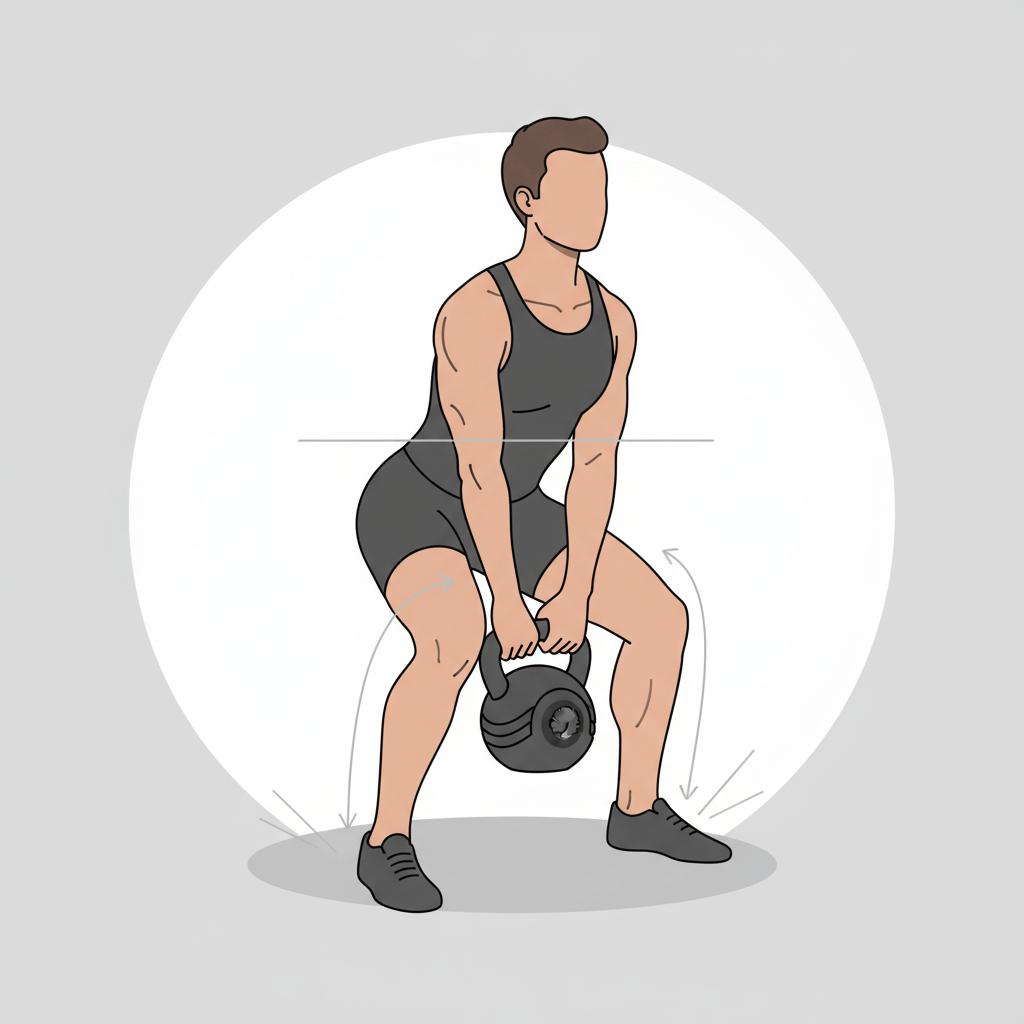
Stand with feet wide and toes turned out. Place the adjustable kettlebell between your feet. Lower your hips until your shoulders sit just above your knees.
Grip and brace
Reach and grab the handle with both hands. Hinge at the hips and keep a neutral spine. Take a big belly breath and brace your core before you pull.
Pull with hip drive
Drive through the heels and push the floor away. Squeeze the glutes at the top. Therefore, lock your hips and keep the kettlebell close to your body.
Controlled descent
Hinge back first, then bend the knees. Lower the kettlebell with control and maintain lat tension. As a result you protect your lower back and reinforce good bar path.
Grip tips and breathing
Use a firm double overhand grip for reps. However, switch to a mixed grip only for heavier single sets. Breathe in on the setup and exhale through the sticking point.
Common mistakes to avoid
- Rising hips before the pull which stresses the lumbar spine.
- Letting knees cave; instead keep them tracking over toes.
- Rounding the upper back; keep chest up and lats engaged.
Program tip
Start with 4 sets of 6 to 8 reps for four weeks. Then progress in small increments using the kettlebell’s micro loading options.
Conclusion
Mastering correct sumo deadlift form and adjustable kettlebells transforms home strength work. The sumo stance shifts force into the hips and glutes, reducing lumbar stress. Adjustable kettlebells let you progress with precise increments and varied movement patterns. As a result, you build strength and movement skill while saving space and time. Moreover, practice consistently. Focus on tight lats, a clean bar path, and controlled hip drive. These steps transfer to heavier lifts and better PRs. However, technique matters most, so prioritize tension and steady progress.
JackedApe supports athletes who train with intensity. The brand makes tactical fitness apparel and gear built for serious performance. Visit the JackedApe shop for functional gear: JackedApe Shop. Also read training tips and longer guides on the JackedApe blog: JackedApe Blog. For more from the team, see the JackedApe website: JackedApe Website and follow on X: JackedApe on X. Train with purpose. Start small, train smart, and then push hard.
Frequently Asked Questions (FAQs)
What is Sumo deadlift form & adjustable kettlebells?
Sumo deadlift uses a wide stance and shorter hip hinge. Adjustable kettlebells let you change weight quickly. Together they let you train hip drive and progressive overload at home.
Are adjustable kettlebells safe for sumo deadlifts?
Yes, when you use correct form and conservative loads. Brace your core and keep a neutral spine. Also, start light and increase in small increments.
How often should I train sumo deadlifts with adjustable kettlebells?
Follow a four to five week block. Do four sets of six to eight reps. Then reassess weight and technique.
What common mistakes should I avoid?
Do not raise your hips before the pull. Do not let knees cave inward. Do not round your upper back. Instead, keep tension and a close bar path.
Can adjustable kettlebells replace barbells for strength gains?
They can for technique and general strength. However barbells remain ideal for maximal loading. Therefore use bells to progress safely at home.


Can Maingaining and calisthenics for beginners build lean mass?
Maingaining and calisthenics for beginners unlock efficient, lean muscle gains with minimal fluff. This approach...
How do thoracic spine stretches relieve desk pain?
Thoracic Spine Stretches Guide Thoracic spine stretches are essential for anyone who sits all day....
How does maingaining build lean muscle without bulk?
maingaining: build lean muscle without excessive bulk Maingaining puts muscle gain first while limiting excess...
Milano Cortina 2026 Winter Olympics: new sports spotlight?
New sports at the Milano Cortina 2026 Winter Olympics Anticipation is building across the fanbase...
How does Omorpho G-Vest Icon boost conditioning?
Omorpho G-Vest Icon The Omorpho G-Vest Icon is a layerable weighted vest for real training....
Why thoracic spine stretches boost breathing and mobility?
thoracic spine stretches Thoracic spine stretches unlock a freer mid-back and better posture. Sit for...
What is maingaining in a 4-week plan?
maingaining: Build Lean Muscle While Staying Agile Maingaining marries steady muscle growth with athletic fitness,...
What are the true benefits of weight loss transformation?
A weight loss transformation can rewrite how you live and feel. It changes more than...