





Mastering Sumo Deadlift Form
Mastering sumo deadlift form is the fastest way to gain strength safely. Because the wide stance shortens range of motion, you can move heavier weight. However, poor setup ruins the lift and threatens your lower back.
A precise setup starts with feet, grip, and tension from the floor. Keep the bar tight to your shins. Set your lats so you pull in a straight line. Hips should sit lower than shoulders. That way hips, glutes, and hamstrings drive the pull.
Therefore, learning the cues now sets you up for big PRs later. Follow clear steps, practice light sets, and keep constant tension every rep. As a result, you will lift smarter, lift heavier, and reduce injury risk. Read on to master technique, programming, and form checks. This guide will teach cues, common mistakes, and practical programming tips. Start here and build confidence rep by rep.
sumo deadlift form: Foot positioning
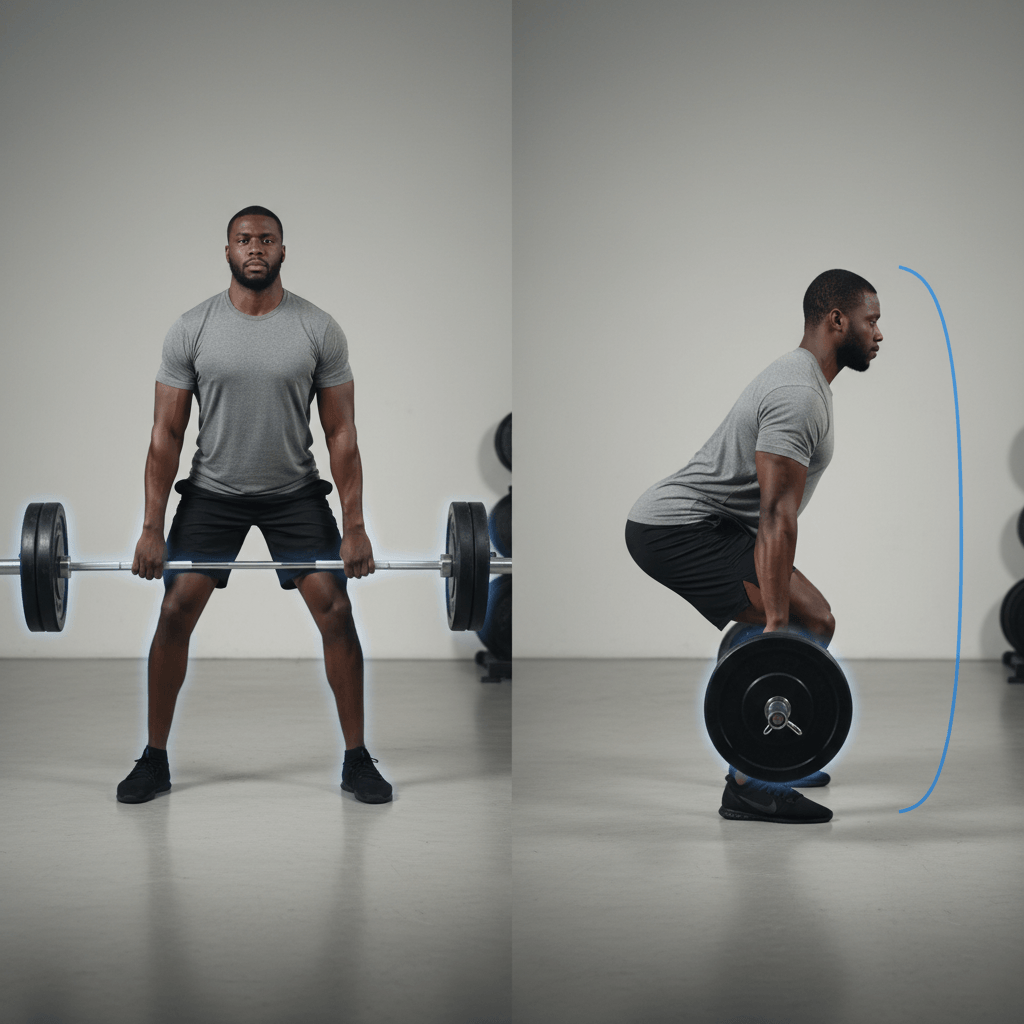
Position your feet wide and outside the knees. Toes should point slightly outwards to match hip angle. Because this reduces range of motion, you can lift heavier weight. Aim to have the bar over midfoot. As a result, the bar travels in a straight path.
Key cues
- Place feet wider than shoulder width. Keep stance stable and strong.
- Turn toes out about 15 to 30 degrees. Adjust for your hip mobility.
- Line the bar over midfoot. That way the bar sits close to shins.
sumo deadlift form: Hip positioning
Set your hips lower than your shoulders. That lets your hips, glutes, and hamstrings drive the lift. However, avoid letting hips rise early. If they rise, the lower back takes over and you risk injury.
Hip setup cues
- Hinge back slightly before you bend the knees.
- Push your butt back and squeeze the glutes. This creates tension.
- Keep hips below the shoulder line so legs drive first.
sumo deadlift form: Deadlift grip
Use a narrow grip inside the legs. Keep your hands tight on the bar. As a result, your arms remain straight levers.
Grip tips
- Use a double overhand or mixed grip for heavier loads.
- Pull slack out of the bar before you start the rep. Maintain tension.
- Keep the bar close so it scrapes the shins on the way up.
sumo deadlift form: Back alignment and breathing
Keep a neutral spine and set your lats. Brace your core like you will be punched. Then take a big breath and hold it while you lift. That way your torso stays rigid and safe.
Alignment and breathing bullets
- Avoid rounding the lower back. Instead, pull with chest up.
- Set lats so the bar pulls in a straight line.
- Breathe deep and brace, then exhale after lockout.
For more coaching depth, check Barbell Medicine. Also consider training aids like ElasticBands and the LunaFit bar. For comfortable gym wear try the Tactical Athletic Sport T Shirt.
| Factor | Sumo Deadlift | Conventional Deadlift |
|---|---|---|
| Stance | Very wide, feet outside knees, toes slightly out | Narrower, feet about hip to shoulder width, toes forward |
| Grip | Narrow, hands inside knees | Hands outside knees, wider grip |
| Muscle focus | Glutes, adductors, hamstrings, quads | Hamstrings, glutes, lower back, erectors |
| Range of motion | Shorter; bar travels less distance | Longer; greater hip hinge depth required |
| Best suited for | Lifters with long legs or hip mobility limits | Lifters who prefer posterior chain emphasis |
| Bar path | Very vertical; stays close to shins | Slightly more forward path from hips |
| Hip position | Hips lower than shoulders at setup | Hips often higher relative to shoulders |
| Common benefits | Move heavier weight over shorter distance; less hamstring strain | Stronger posterior chain carryover; natural for many lifters |
| Common mistakes | Letting hips rise early; bar drifting forward | Rounding lower back; bar too far from shins |
| Programming tip | Cycle 4–5 weeks; 4 sets of 6 to 8 reps works well | Use for heavy singles and conventional volume blocks |
| When to choose | If you want shorter pull and leg drive emphasis | If you want raw posterior chain development |
sumo deadlift form: Common mistakes and how to fix them
sumo deadlift form breaks down when simple tensions disappear. Below are the most common errors and clear fixes. Use these cues each set to protect your back and build strength.
sumo deadlift form: Foot positioning errors
- Mistake: Feet too narrow or toes not turned out. This limits leg drive.
- Fix: Widen stance so feet sit outside knees. Turn toes 15 to 30 degrees. Then test with an empty bar.
sumo deadlift form: Hip positioning mistakes
- Mistake: Hips rise before the bar moves. As a result, the lower back becomes the lever.
- Fix: Set hips lower than shoulders. Hinge from the hips and push your butt back. Squeeze glutes before you pull.
sumo deadlift form: Grip and tension problems
- Mistake: Slack in the bar and loose hands. That ruins the start of the pull.
- Fix: Take a tight grip and remove slack. Pull your shoulders over the bar. Keep constant tension even with light loads.
sumo deadlift form: Back alignment and breathing errors
- Mistake: Rounded lower back or weak brace. This increases injury risk.
- Fix: Set your lats and brace hard. Take a big breath and hold it through the pull. Then exhale after lockout.
sumo deadlift form: Bar path issues
- Mistake: Bar drifts away from the shins. That forces the back to work harder.
- Fix: Keep the bar close so it scrapes the shins. As a result, you maintain a straight, powerful pull.
Practice these corrections with light sets. Therefore, you form strong habits. Then you will add weight safely and confidently.
CONCLUSION
Proper sumo deadlift form protects your back and builds raw strength. Because hips, glutes, and hamstrings must drive the lift, setup matters more than load. Follow cues: wide stance, narrow grip, lats set, and bar close.
Mastering technique reduces injury risk and improves performance. Therefore, practice light sets and keep tension every rep. As a result, your PRs will reflect your skill and consistency.
Keep working on your sumo deadlift form through consistent practice. Use video checks and light tempo work to reinforce habits. Start each session with drills and a few warmup reps.
JackedApe builds for athletes who train with intensity and live with purpose. The brand provides high performance fitness and combat apparel for serious performance. Visit JackedApe to learn more, and shop directly at JackedApe Shop to gear up. Train smart, stay consistent, and lift with confidence.
Frequently Asked Questions (FAQs)
Is sumo deadlift form better for beginners?
Sumo can be friendly for some beginners because range of motion is shorter. However, beginners must nail setup. Start with light loads like 135 or 225 and practice tension and foot positioning.
How wide should my stance be?
Place feet well outside the knees. Aim for toes turned out 15 to 30 degrees. Adjust based on hip mobility and comfort.
Where should my hips be at the start?
Hips should sit lower than shoulders. That way legs, glutes, and hamstrings drive the lift. If hips rise early, the lower back takes over.
How do I breathe and brace?
Take a big breath and brace like you expect a punch. Hold breath through the pull. Then exhale after lockout. This keeps the torso rigid and safe.
Sumo or conventional which should I choose?
Choose based on body mechanics and goals. If you have long legs or want a shorter pull, try sumo. If you want posterior chain emphasis, use conventional. Also, cycle both across training blocks.
Pro tip: Film your setup often. Then compare angles and cues. When possible, get a coach or training partner to watch. As a result, you will fix small errors faster and build confidence.


Can Maingaining and calisthenics for beginners build lean mass?
Maingaining and calisthenics for beginners unlock efficient, lean muscle gains with minimal fluff. This approach...
How do thoracic spine stretches relieve desk pain?
Thoracic Spine Stretches Guide Thoracic spine stretches are essential for anyone who sits all day....
How does maingaining build lean muscle without bulk?
maingaining: build lean muscle without excessive bulk Maingaining puts muscle gain first while limiting excess...
Milano Cortina 2026 Winter Olympics: new sports spotlight?
New sports at the Milano Cortina 2026 Winter Olympics Anticipation is building across the fanbase...
How does Omorpho G-Vest Icon boost conditioning?
Omorpho G-Vest Icon The Omorpho G-Vest Icon is a layerable weighted vest for real training....
Why thoracic spine stretches boost breathing and mobility?
thoracic spine stretches Thoracic spine stretches unlock a freer mid-back and better posture. Sit for...
What is maingaining in a 4-week plan?
maingaining: Build Lean Muscle While Staying Agile Maingaining marries steady muscle growth with athletic fitness,...
What are the true benefits of weight loss transformation?
A weight loss transformation can rewrite how you live and feel. It changes more than...